The Left Has a Growing Conspiracy Theory Problem
Parts of the Left are adopting the same paranoid logic they once recognized as a defining sickness of the Right.

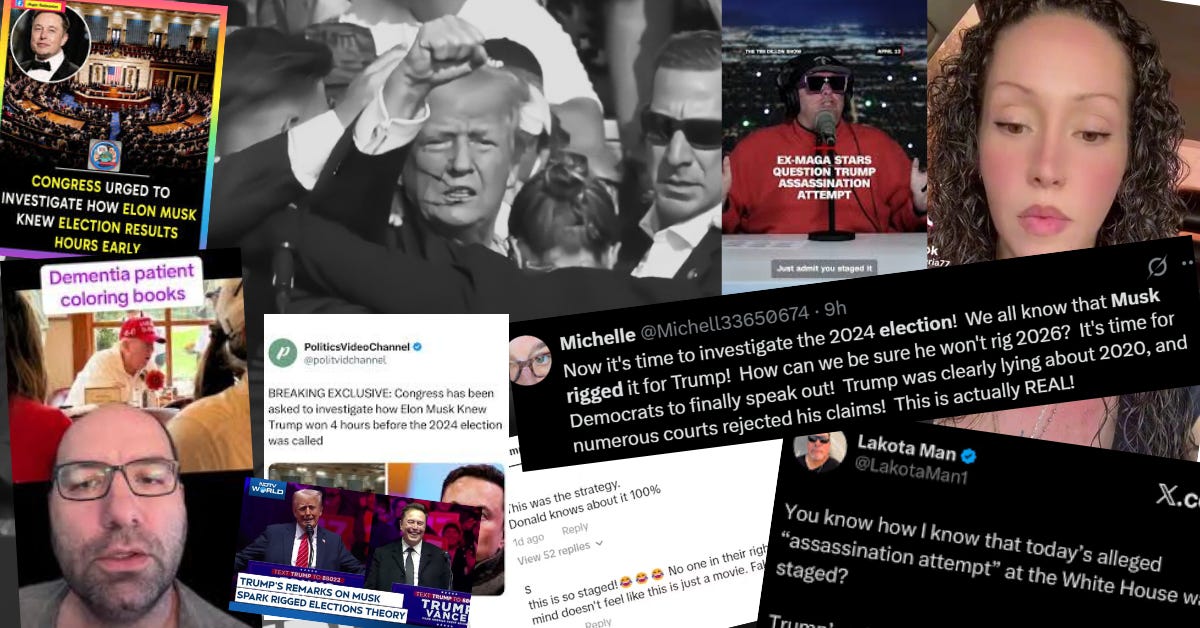
Consider just a handful of claims pulsing through public discourse today: President Donald Trump is dying of dementia with only days to live. Elon Musk altered vote totals to elect Trump in 2024. The government has in its possession extraterrestrial bodies. The assassination attempts on Trump’s life are false-flag events. A secret cabal of Jewish billionaires controls global events. COVID-19 was intentionally released on an unsuspecting public from a biolab.
I’ve seen most of these claims circulating through liberal and left-wing online spaces, some explicitly and others through insinuation. But is there reliable evidence for a single one of the above claims, which range from silly to outright bigoted? Nope.
I’m not going to link to the irresponsible claims because elevating them further is dangerous and readers have already seen them ad nauseam. The QAnon-ification of American politics has escaped right-wing containment. The Republican Party may remain its primary home, but the same conspiratorial logic is rapidly growing on the Left. We’re headed toward a critical mass of paranoia.
To be clear, real conspiracies exist. Corporations and billionaires wield oligarchic power. Governments abuse power. Politicians lie with abandon. But allowing those truths to override critical thinking and foster the embrace of unsubstantiated conspiracy theories is dangerous.
Institutional trust has collapsed with such force, and understandably so, that the American people are engaged in a giant game of 24/7 social media telephone, leading to partisan misinformation echo chambers. Each side, correctly, looks at the other’s misinformation with disdain, then carries right along with its own.
The consequence of this vast conspiracy infrastructure is that many Americans trust nothing at all, denying everything from multiple active genocides to basic health facts, while collapsing legitimate scrutiny of new technologies into fantasies of inevitable dystopia. The sense of despair is palpable.
In short: conspiracy theories are making us miserable, confused, and afraid. The irony of it all is that information has never been more accessible. While critical thinking is essential to navigating the onslaught, we exist in an age of both remarkable information availability and mass disinformation.
But instead of empowering ourselves to wade through and become the best-informed generation of humans ever to live, many Americans are giving up. We’re retreating into nihilism, techno-dystopianism, and self-infantilization. And the existing power centers benefit from this fearful populace with little reason to change the tide.
The American Left remains far less institutionally captured by conspiracism than the MAGA Right, but too many liberal and left-wing voters and online surrogates now respond to Trump with the same totalizing logic: the election must have been rigged, assassination attempts must be be staged, and unanswered questions are proof of a plot.
What can we do? Stop outsourcing our judgment to politicians, influencers, and media personalities whose power depends on keeping us frightened. Take the time to learn each day, especially through reading well-researched books (whether print or audio). Verify information before sharing. Engage in community. Stop financing charlatans who ride fear into power.
Cynicism is not critical thinking. The person who assumes institutions lie by default and events are most likely rigged, regardless of evidence, is demonstrating gullibility rather than intelligence. Critical thinking requires enough hope to keep investigating, discipline to follow facts, and humility to change one’s mind when the evidence dictates.
In the many conversations I have with people across the political spectrum each week, a common thread emerges: a desire for trust and human connection. When I demonstrate care and trustworthiness, even amid serious political disagreement, tension gives way to connection.
Conspiratorial thinking thrives in a world experienced as hostile and rigged beyond repair. Evidence matters, but evidence is difficult to receive when institutions appear corrupt and disagreement feels like a personal betrayal. Acts of kindness and humility cannot disprove a false claim, but they can help restore the trust required to confront it.
We need to recognize that misinformation isn’t just something done to us. Every unverified claim we repost, every fear merchant we reward, and every retreat into fear-based isolation makes the problem worse. The best defense against misinformation and fear is a reassertion of our own social agency. We have the choice to build lives rooted in trust, care, and reality.


