
Did Mamdani Break a Promise by Endorsing Against Espaillat?
The public evidence is a lot fuzzier than claims suggest.
UPDATE [June 6, 2026]
Peter Sterne of City & State provided the following quote:
“After speaking with you, I heard from some sources I trust that it really was an explicit agreement. I know, I know – more anonymous sources! Until Espaillat or Mamdani go on the record to confirm or deny an agreement, we won’t know for sure. But here’s my current understanding of what happened, based on what’s been reported and what I’ve been told: Espaillat insisted Mamdani commit to endorse him in the primary in exchange for a general election endorsement, and Mamdani agreed. At the time, he had no reason to think a viable DSA candidate was going to challenge Espaillat, so it didn’t seem like a major sacrifice. But when the circumstances changed, and Mamdani saw that Darializa had a real shot of winning, he let Espaillat know that he had to withdraw from his earlier commitment.”
The central tension about public sourcing and documentary evidence remains. What comes into greater focus is the Espaillat camp’s rejection of any notion of misunderstanding, alongside continued silence from the mayor and his team.
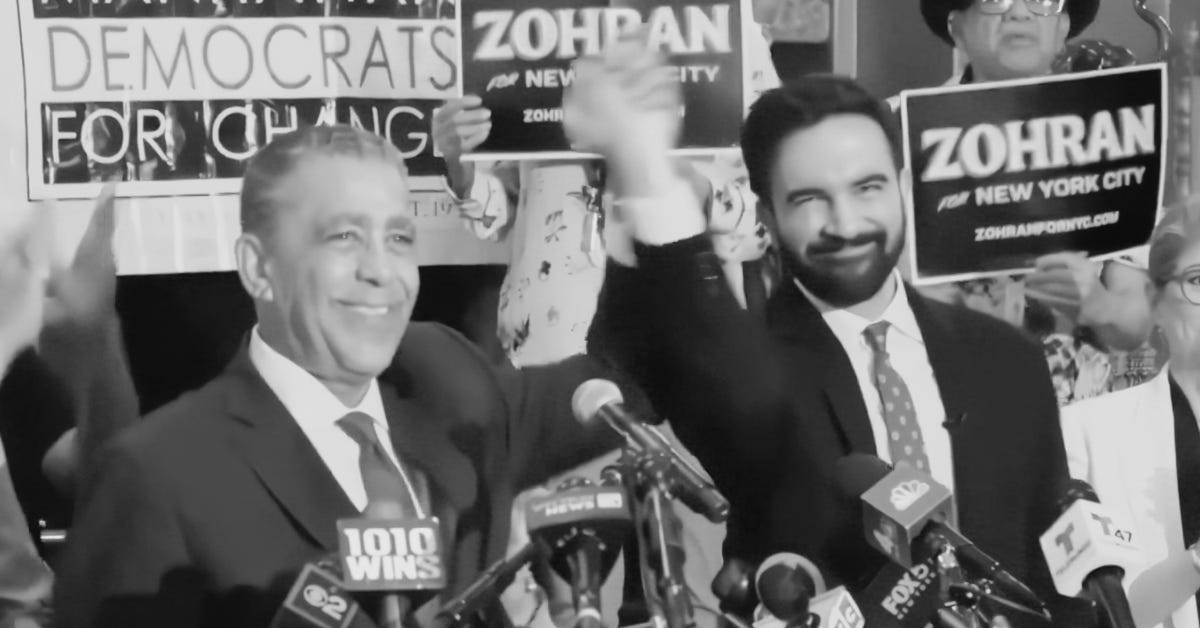
At the end of May, New York City Mayor Zohran Mamdani endorsed Darializa Avila Chevalier in her race to oust Rep. Adriano Espaillat from New York’s 13th congressional district seat. The move was, by turns, predictable and controversial. Chevalier is supported by NYC-DSA, and the mayor is expected by his base to endorse NYC-DSA congressional candidates.
Mamdani has also played it safe on a handful of occasions, notably discouraging Chi Ossé from challenging House Minority Leader Hakeem Jeffries and urging NYC-DSA members against endorsing Ossé in that race. He’s also stayed out of a handful of state races.
I won’t get into the dynamics and implications of the NY-13 race itself. Michael Lange has that covered.
I want to explore whether the widely circulating claim that Mamdani broke a promise to endorse Rep. Espaillat is factual, inconclusive, or inaccurate.
After Mamdani endorsed Chevalier, the incumbent Espaillat responded in measured ways, allowing his allies to do the talking for him. Notably, Espaillat is not on the record claiming the mayor broke a promise.
Fiercest among the sources claiming a promise was broken is outgoing Rep. Nydia Velázquez, whose earlier support for Mamdani has given way to a series of endorsements against NYC-DSA candidates and condemnations of his perceived lack of loyalty.
“It’s very difficult to say about someone that you don’t trust that person,” Rep. Velázquez told Politico. “But your actions are raising serious concerns about taking you at your word — and that is very, very, very problematic in this business.”
Politico further reports:
“Last summer, Mamdani privately promised Espaillat he would support his reelection run, according to Velázquez and a person with direct knowledge of the conversation who was granted anonymity to discuss it. Mamdani made that behind-the-scenes commitment in conjunction with Espaillat endorsing him in the general election for mayor shortly after he defeated former Gov. Andrew Cuomo in last June’s Democratic primary (Espaillat had supported Cuomo in the primary).”
That leaves readers with a reported private commitment sourced to one named public critic and unnamed people described as familiar with the conversation or pledge, but not with documentary evidence, contemporaneous notes, or on-the-record confirmation from either Mamdani or Espaillat. That’s not to suggest dishonesty, but rather that misremembering, missing context, or misunderstanding shared events could leave the claim reflecting a subjective interpretation rather than an objective account.
Rep. Velázquez also told Politico’s Chris Sommerfeldt that “Mamdani’s commitment to back Rep. Adriano Espaillat for reelection was at first so ironclad they shook hands on it last summer.”
Next, we have an even more amorphous claim in the New York Times:
“Mr. Mamdani had committed to supporting Mr. Espaillat last year, according to three people familiar with the pledge. It came after the congressman dropped his support for former Gov. Andrew Cuomo’s mayoral bid and got behind Mr. Mamdani after he won the Democratic primary.”
This language is vague within the context that Rep. Espaillat backed former Governor Andrew Cuomo in the mayoral primary and switched to Mamdani after he won the primary. The claim doesn’t specify if “supporting Mr. Espaillat” specifically means backing him if he secures the party’s nomination or in the primary.
While the claim has appeared in other outlets, the sourcing reliably leads back to the Politico and New York Times reporting.
Readers who have gotten this far will notice what we don’t have: any documentary evidence that Mamdani made a promise to back Rep. Espaillat in his primary.
I didn’t encounter a single journalist, even on background, who expressed full confidence about what the mayor explicitly said to Rep. Espaillat.
City & State’s Peter Sterne offered an analysis that summarized the reality of the situation:
“Only Mamdani and Espaillat know what was actually said – and neither of them are talking on the record. It’s possible that Mamdani actually said, ‘I’m so grateful to you for endorsing me for the general election now that I’m the Democratic nominee that I’ll oppose any primary challenge against you, even if they’re a democratic socialist,’ but I doubt it was so explicit.
More likely, this is a Rashomon situation. There’s a lot of gray area, especially given how charming the mayor can be. I can easily see Mamdani indicating his support for Espaillat in a way that led Espaillat to think a primary endorsement was in the bag, but which Mamdani didn’t see as an explicit quid pro quo—in contrast to his conversations with Hochul.”
Despite the certainty readers might infer from various media reports and headlines, we do not know what the mayor said. What the public record supports is that Rep. Espaillat’s allies experienced the mayor’s decision as a betrayal of a commitment they believed he had made.
Unless clear evidence emerges, the mayor’s defenders will hold that his alleged promise-breaking was a misinterpretation of a commitment to support the Democratic nominee, and Rep. Espaillat’s supporters will continue to say the mayor is untrustworthy.
The only verdict available today: inconclusive.


